

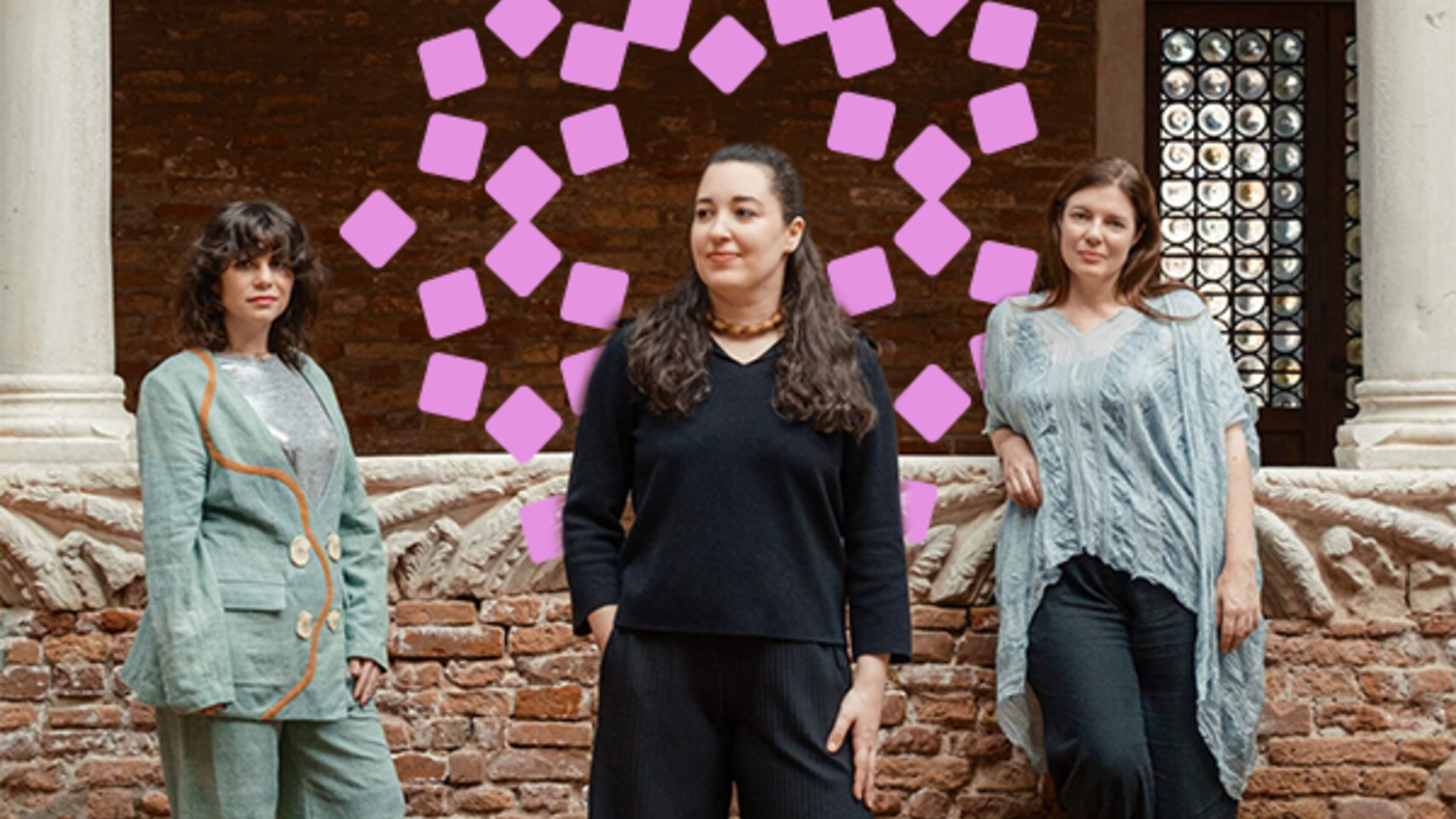
Saudi Arabia will return to the 61st International Art Exhibition of La Biennale di Venezia from 9 May to 22 November 2026, marking the Kingdom’s fifth participation in Biennale Arte. Commissioned by the Visual Arts Commission under the Ministry of Culture, the pavilion brings together artist Dana Awartani, curator Antonia Carver and assistant curator Hafsa Alkhudairi within In Minor Keys, the curatorial framework for Biennale Arte 2026 developed by Koyo Kouoh and being realised by La Biennale following her death.
At the centre of the pavilion is Dana Awartani, who will present a new body of work at the Arsenale, Sale d’Armi in Venice. Based in Jeddah, Awartani works across painting, sculpture, performance and installation, drawing on Islamic and Arab art-making traditions while engaging questions of cultural heritage, craft and artisanship. Her practice also reflects a clear UK-linked dimension, with degrees from Central Saint Martins and The King’s Foundation School of Traditional Arts in London, and presentations at institutions including the British Museum and Arnolfini in Bristol.
The pavilion will be curated by Antonia Carver, Director of Art Jameel, whose institutional work has included leading Hayy Jameel in Jeddah and Jameel Arts Centre in Dubai. Earlier in her career, she served as Director of Art Dubai, worked as an editor and curator at Bidoun, and held roles in strategy and programming at the Dubai International Film Festival. Working alongside her is Hafsa Alkhudairi, a writer, curator and researcher whose experience has included the Royal Commission for AlUla and the Saudi Ministry of Culture. Her independent curatorial practice explores the relationship between the written word and visual representation through themes of intergenerational memory and popular culture, while her academic path also carries a UK link through her MA in Contemporary Literature and Culture at Birkbeck College, University of London. Together, Carver and Alkhudairi give the pavilion a curatorial structure shaped by research, institutional experience and international exchange.
The 2026 pavilion also sits within a broader Saudi trajectory at La Biennale di Venezia. According to the National Pavilion’s official history, Saudi Arabia first participated in 2011, establishing a platform through which Saudi artists and architects could present their work to an international audience. Since then, the pavilion has developed as a space for dialogue, research and exchange, reflecting the Kingdom’s wider commitment to supporting its contemporary art and architecture sectors.
That history is reflected in a series of distinct presentations over time. Saudi Arabia’s inaugural pavilion in 2011 featured Shadia and Raja Alem with The Black Arch, a work rooted in memory, place and collaboration. In 2019, Zahrah Alghamdi represented the Kingdom with After Illusion, a site-specific installation using natural materials and ideas of home and recognition. In 2022, Muhannad Shono presented The Teaching Tree, a large-scale installation exploring themes of regeneration, resilience and creative possibility. Together, these participations reflect a pavilion history shaped by materially grounded practices, strong curatorial framing and an increasingly confident Saudi presence on one of the world’s most important contemporary art platforms.


