AlUla is a place shaped by centuries of human connection, movement and exchange. Historically sustained by 45 natural springs along the ancient incense trade route, the region has long offered water, shade and rest to those crossing it. Alongside its well-known landscapes and archaeological heritage are the everyday voices, music and memories of the people who live there today.
The project “Cries in the Desert” brings these perspectives into focus through collaborative artistic practice. Created by international artists Neil Musson and Jono Retallick, in collaboration with filmmaker Jon Bilbrough and Saudi collaborator Mohammed Alhusayni, the project explores AlUla’s cultural landscape through sound, film and community engagement. Supported by the British Council Saudi Arabia and Arts AlUla, the initiative was presented during the AlUla Arts Festival as both an immersive exhibition and a film experience.
At its centre, Cries in the Desert brings together conversations, music and landscape to reflect the experiences of people connected to AlUla.
Listening to AlUla
Rather than focusing solely on monuments or heritage landmarks, the artists spent time meeting local residents including farmers, musicians, elders, students and craftspeople. Conversations took place in homes, farms and community spaces, allowing participants to share personal stories about their connection to AlUla and their hopes for its future. These encounters became the foundation of the artwork.
The project captures oral histories, everyday conversations and traditional music, presenting them alongside filmed landscapes of the place. Together they reveal layers of life often overlooked, from the rhythms of farming to the warmth of family gatherings and the memories passed between generations.
The result is not only documentation but an artistic interpretation shaped through dialogue with the community.
Six Stories, One Landscape
The film component of Cries in the Desert is composed of six short cinematic sketches that together form a 30-minute journey through AlUla’s natural and cultural environment.
Each piece corresponds to a stage of the date palm’s growth, a symbolic structure reflecting the layers of life within the oasis. The sketches move from “Below the Surface”, representing the life-giving springs beneath the ground, through paths, voices and trees, and finally to the mountains and the sky beyond.
Through this structure, the artists connect nature, community and heritage, illustrating how landscape and people shape each other across time.
Voices Shared Through Collaboration
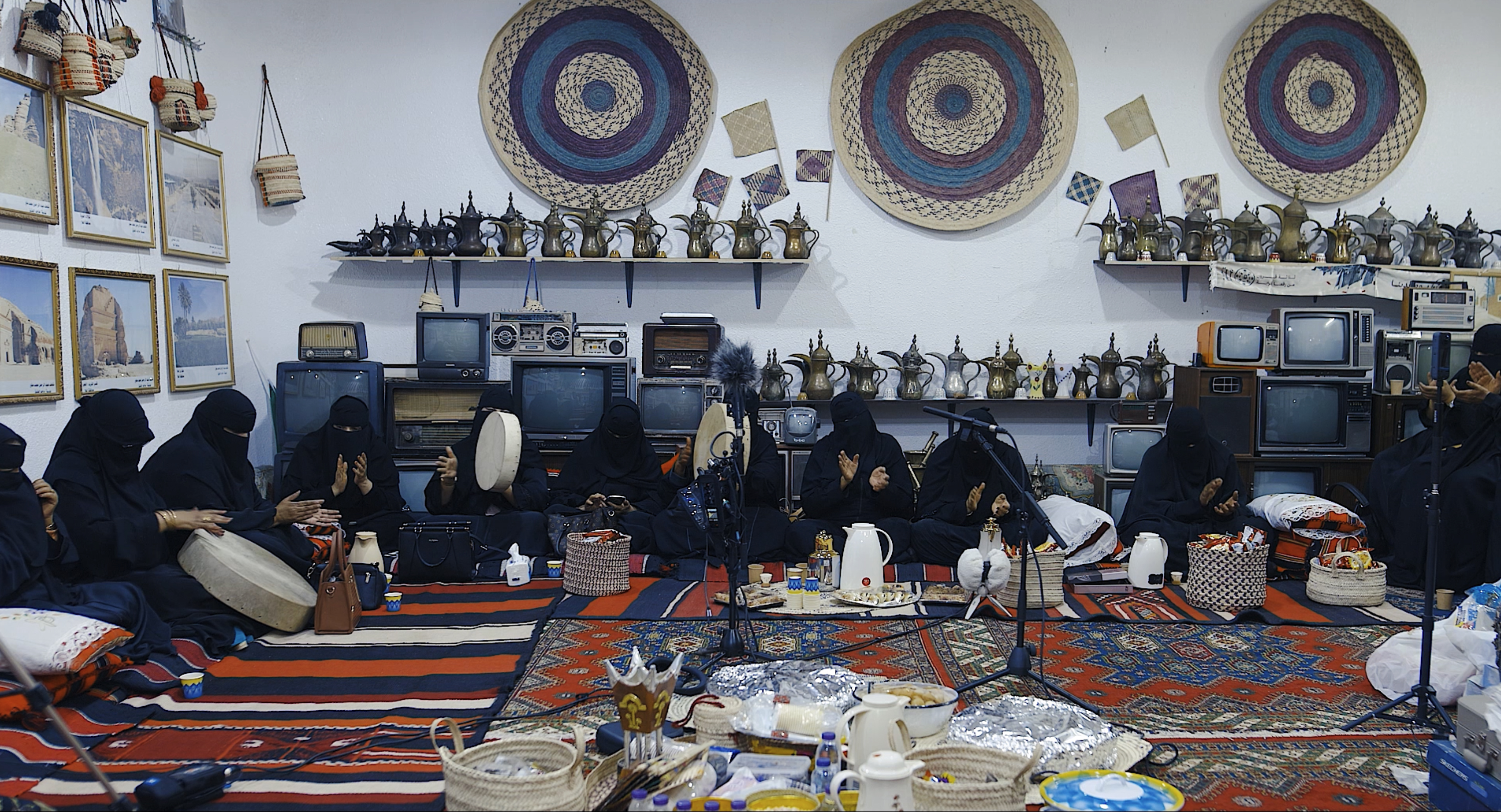
One of the most powerful moments of the project came when the artists recorded fourteen female musicians performing traditional music that had never before been publicly recorded.
For generations, these songs had been shared privately among women, passed down from mothers to daughters. Their participation in the project not only preserved a cultural tradition but also revealed a unique aspect of AlUla’s musical heritage, including the unexpected presence of the harmonica as a lead instrument. The recordings capture both the joy of performance and the importance of safeguarding cultural memory.
An Exhibition Inside the Old Town
During the AlUla Arts Festival, the project was presented as an immersive installation inside a traditional mud-walled house in AlUla’s Old Town. Visitors moved through rooms that combined film projections, binaural sound installations and atmospheric design inspired by the architecture of the historic settlement.
One room played the voices of farmers discussing their land and heritage, while another allowed audiences to listen to the women’s music in an intimate setting. The multi-screen installations echoed the textures of the surrounding architecture, blending contemporary art with the material culture of the region.
The exhibition attracted thousands of visitors during the festival, bringing together audiences from different backgrounds and nationalities.