AlUla Grants, delivered by the British Council in partnership with the Royal Commission for AlUla (RCU), support initiatives that strengthen cultural exchange and professional development between the United Kingdom and Saudi Arabia. One of the projects supported through this programme was the AlUla Rock Art Field School, the first of its kind in the Kingdom, designed to equip students and heritage professionals with practical skills in rock art research and conservation.
Held from 12 to 21 October 2025, the field school brought together four Saudi female students and two RCU heritage professionals, alongside a UK postgraduate student from Durham University. Led by rock art specialist Dr Maria Guagnin, the programme combined intensive fieldwork with classroom sessions to provide a complete introduction to the techniques and methodologies used in rock art documentation.
Hands-on Training in the Field
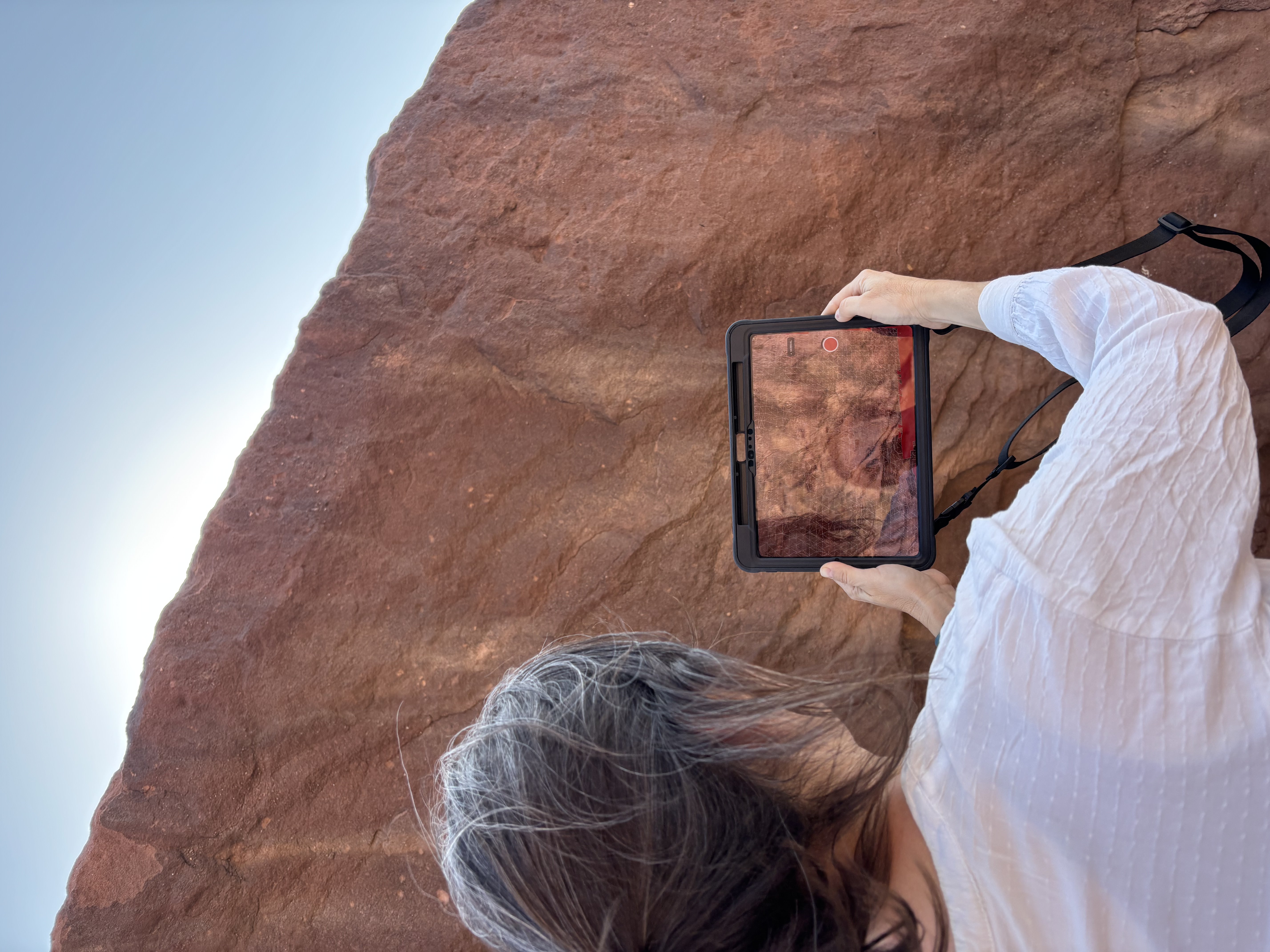
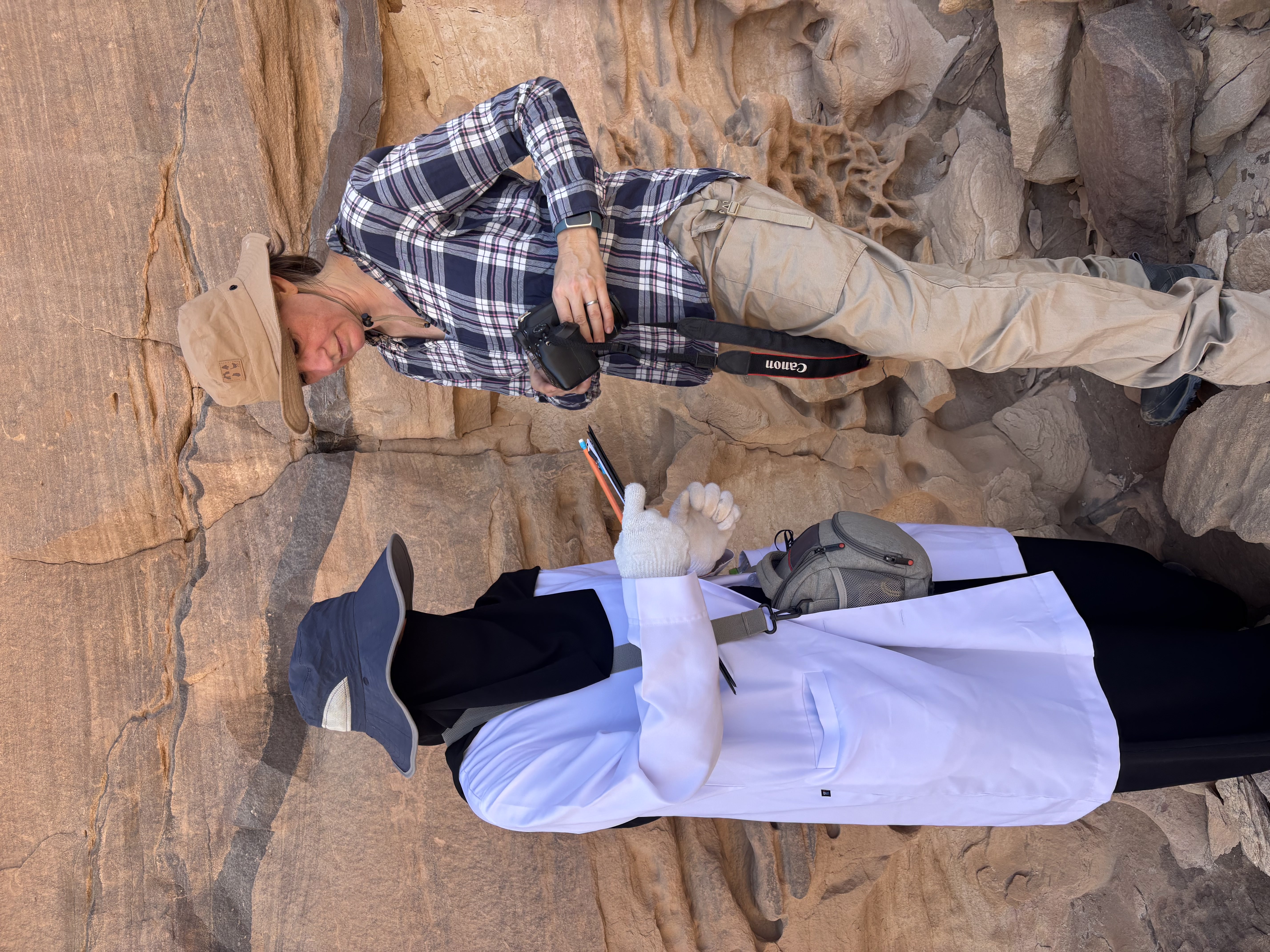
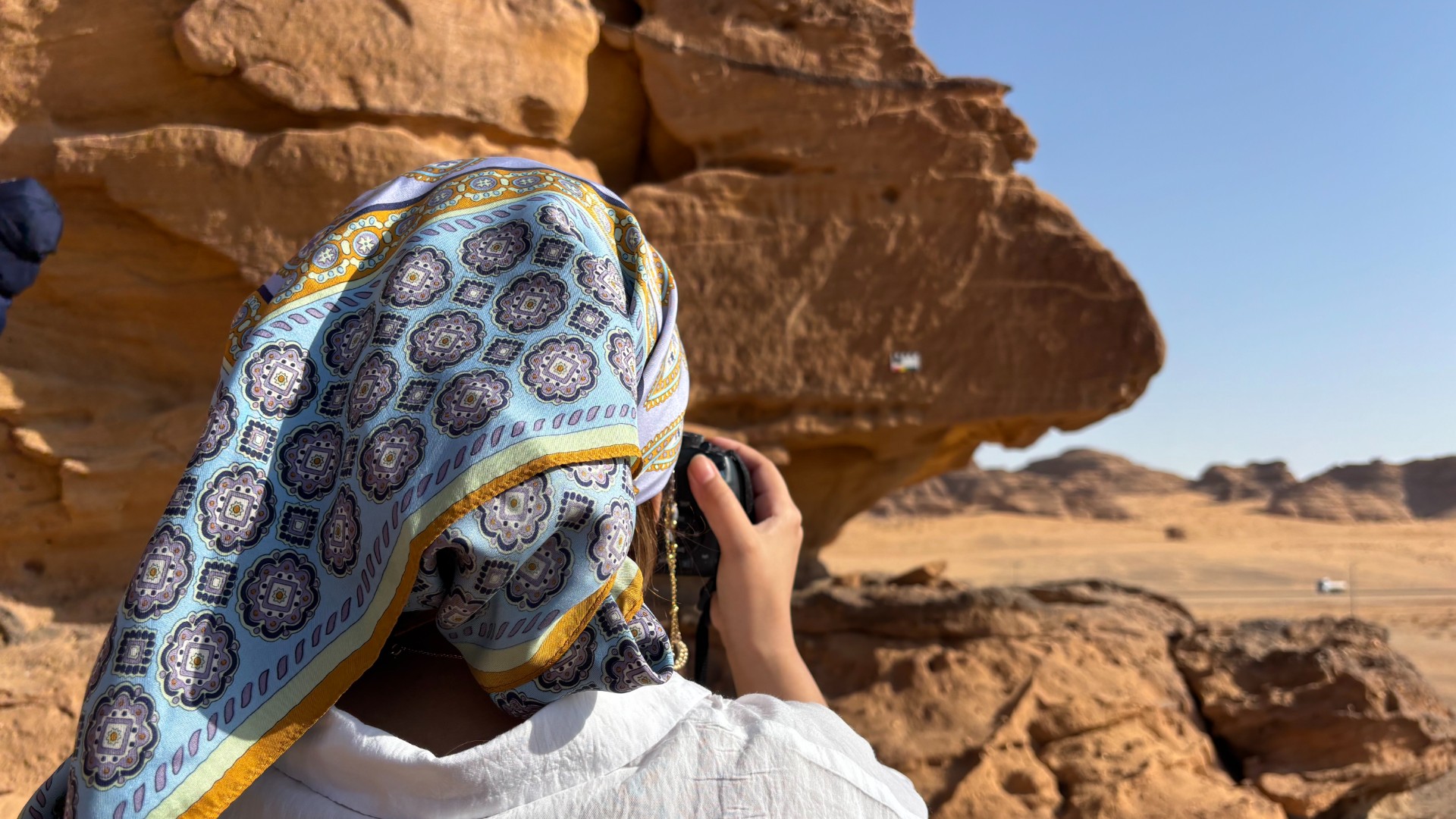
Participants received instruction in a wide range of techniques, including rock art documentation, analysis, 3D recording, microscopy, mapping and tracing. Classroom sessions covered archaeological context, data structuring and research organisation, while fieldwork allowed participants to apply these methods in real-world settings.
For most participants, these were entirely new skills. Of the six participants, five had never previously documented rock art in the field, and none had prior experience with data capture, dating methods, microscopy, 3D modelling, or experimental approaches such as tool analysis and rock art production.
Student feedback highlighted the value of the practical approach. Two participants noted they had previously sought training opportunities in these skills but had been unable to find local courses. One student applied the techniques directly to her PhD research and submitted her findings to the programme lead for feedback.
Conservation and Understanding the Landscape
The programme also emphasised the importance of protecting heritage sites. Participants learned how different materials, such as sandy deposits surrounding rock art, require careful handling for dating and preservation. This understanding contributes to broader conservation efforts in the region and ensures that local heritage remains accessible for both research and public engagement.
The training strengthened the academic and professional capacity of participants and provided insights into conservation issues, research skills, and career development.